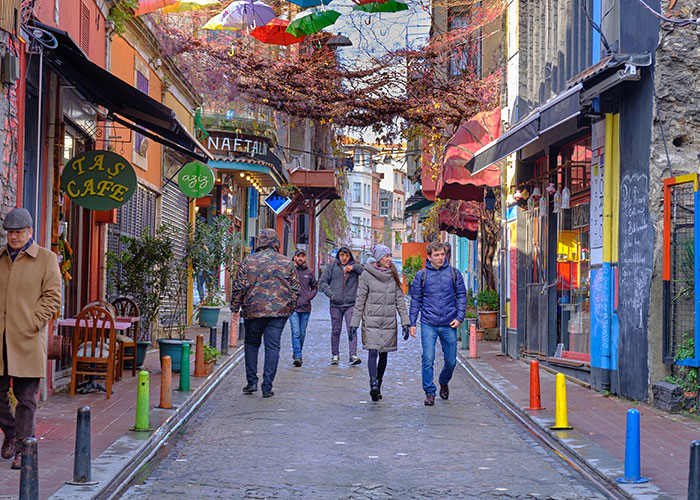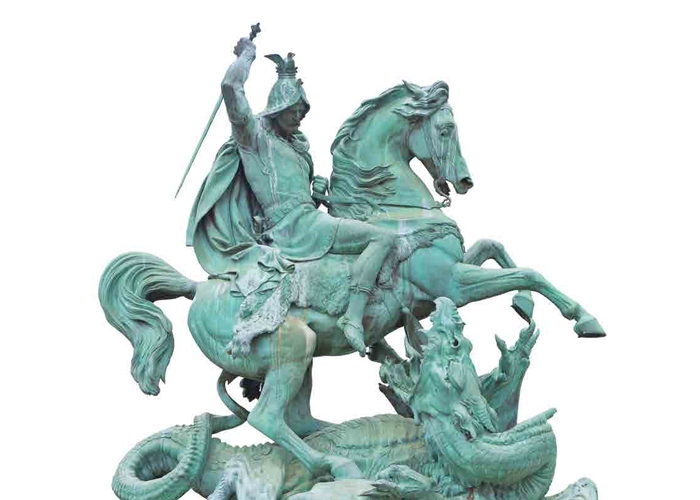
It is possible to see the traces of the past going back hundreds of years on the streets of Zagreb, which is 170 km from the Adriatic Sea. Zagreb is the capital of Croatia, which became a member of the EU in July 2013, and is situated on the banks of Sava River to the north of the country. It is the most crowded city in Croatia with a population of 1,288 million. Zagreb consists of two sections defined as Gornji Grad (Upper Town) and Donji Grad (Lower Town). The Kaptol and Gradec areas are in Gornji Grad. Historical monuments from the middle ages are also concentrated in this section of the city. The first indication of a settlement in the city of Zagreb, which was established in the year 1851, when the two cities Kaptol and Gradec were joined, dates back to the 1st century. In the city where a university was established in the year 1699, plague took many lives when the epidemic broke out in the 17th and 18th centuries. Zagreb is 170 km from the Adriatic Sea and is a connection point that extends from the Adriatic Sea to Central Europe. For a period, the passengers of the Orient Express, travelling from Western Europe to Istanbul made a stop-over at Zagreb and passengers were able to visit Maksimir Park. In the 17th century, during the Baroque style renewal of the city, the old wooden houses were demolished while the palaces, churches and monasteries were renewed according to their original structures. The establishment of art studios and the arrangement of trade fairs added to the riches of the city to render Zagreb a city of importance today. Zagreb became the capital of the Croatia-Slovenia Kingdom within the scope of the Austria- Hungary Empire in the year 1868. In 1891 the first street car pulled by horses and in 1905 the first electrical train were put into service in this city. Automobiles were first seen on the streets of the city in 1901. Today there are many streetcar lines in Zagreb which display the typical plan of a Central European city with streets crisscrossing each other. Travelling on these street cars that operate day and night is very entertaining as well as being very convenient. In Zagreb there is one university, ten theatres, twenty one museums and fourteen art galleries. Taking a stroll on the streets of Zagreb is like visiting an art gallery. Street artists offer a feast for the eyes on street corners, in squares and in the streets. Another unique characteristic of Zagreb is its claim to animation. There are many opportunities for young people who would like to train themselves in this field. The schools providing animation training take the lead on the subject. This is why the annually held international animated movie festival and the gathering of animation artists and producers from all over the world in this city do not surprise us. The climate in Zagreb is under the effect of a continental weather system. The city experiences four seasons. Summers are usually very hot and dry while winters are very cold and rainy; therefore spring and fall are the ideal seasons for any intended trip. If you are not affected by extremes of hot or cold weather, then you can enjoy Zagreb any day of the year. Touring Zagreb to see its museums, cathedrals, markets, cafes-bars and squares is a great joy. Lotrscak Tower, Ben Jelacic Square, St. Stephen Cathedral, Jarun Lake, the Archeology Museum, Modern Arts Museum, Museum of Broken Relationships, Maksimir Park, Dolac Square Market are among the places that must be seen. In Zagreb, seeing a bird’s eye view of the city is an absolute must. Watching the panoramic view of Zagreb from Lotrscak Tower by climbing up using the century old funiculars is very exciting. As can be seen from Lotrscak Tower, Zagreb has an architecture that reminds one of the Austrian- Hungarian Empire and the socialist past of the city. Looking at the history of the city from this perspective makes it possible for us to understand the diversity woven into the architectural fiber of the place. Ben Jelacic Square is named after the soldier Josip Jelalic who once defended his country against Ottoman threat. His statue of sizable proportions, showing him on a horse, stands in the middle of the square. St. Stephen Cathedral was built in 1899. Its two large towers were constructed according to gothic architectural understanding. In Zagreb nature is protected and Jarun Lake is a must see place that is surrounded with greenery. In this man-made lake that was established by using flood waters from Sava River in 1987. You can swim in the lake, take a tour on a sea-bike or row a boat. It is possible to play golf, beach volleyball, basketball and table tennis on the fields surrounding the lake. You can see various archeological remains from Egypt, Rome and antique Greece at the Archeology Museum of Zagreb. The most interesting and romantically inclined of Zagreb’s museums is the Museum of Broken Relationships. The romantic atmosphere of this museum does not originate from the mini-structure itself. Whatever is left over from relationships that end are brought to this museum. A woman whose marriage ended donated her wedding dress to this museum. We learn her story through the message she penned. The romanticism of the museum originates from the characteristics of the objects displayed rather than its atmosphere.

We hate spam as much as you do
© Copyright 2020, All Rights Reserved

 English
  Türkçe