THE HUMAN BEING’s engagement in art is fed by the instinct of self-expression but another instinct equally strong is also involved in this course: To be remembered, to leave a trace. On the other hand, the rivalry among artists arising from the hunger for more creativity, more fame and the creation of ‘better’ artworks, ignited also the biggest jealousies in the history. Here are the most famous stories of rivalry:
Van Gogh & Gauguin
The dispute ending with Absinthe
THE JEALOUSY
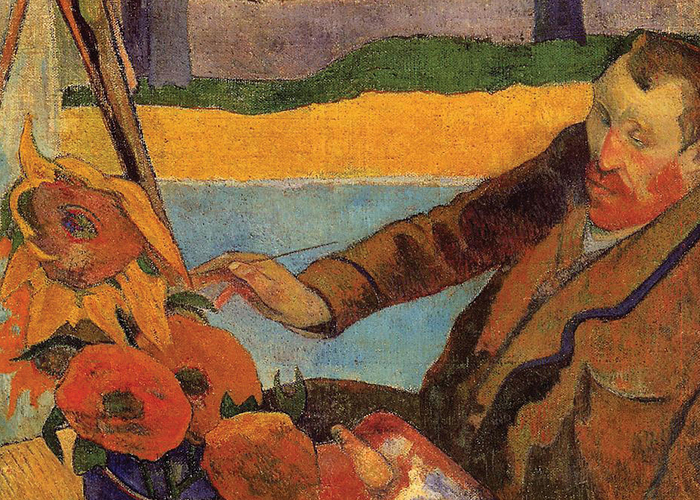
between Van Gogh and Gauguin erupted actually from friendship. Van Gogh invited also his fellow Gauguin to the commune he established for the artists in the village of Arles , France. But soon, some tensions arose within the commune. When Van Gogh, known for his psychological disorders, was painted on the work ‘Van Gogh is Painting the Sunflowers’ by Gauguin, having a narcissistic personality, the tension increased.
Van Gogh, who painted the sunflowers remaining alive for a short time and put the work in the room of Gauguin, was furious to see that Gauguin had painted him creating the work of sunflowers after that the season of sunflowers was over,. At the end of the tension rising with the implications of superiority, Van Gogh claimed that Gauguin sees him as an insane and poured one bottle of Absinthe over the head of his rival.
Who cut the ear?
THE CUT EAR
of Van Gogh is famous. Various stories are told about how that ear has been cut. Some say the ear was cut by Van Gogh himself whereas some other argue that Gaugin cut the ear during one of their disputes.
Picasso & Matisse
Is this painting of rivalry fake?
THE RELATION
between Picasso and Matisse, two masters of the modern art, never crossed the boarders of respect but it was among the most famous rivalries in the art.
Although Picasso was younger than Matisse, the most iconic works of both coincided in the same period. Matisse who painted Blue Nude in 1907, defined Picasso, who painted the Girls of Avignon the same year, as ‘an innovative painter who needs to learn a lot from him’.
Though the discussions between the two painters never grew serious, they were compared frequently by several art historians and critics. And some art critics even argued that the two painters were actually involved in an exaggerated pseudo fight in order to stay on the agenda. Their statements and works triggered always curiosity and the two painters took place among the 5 big jealousies of the art history.
Delacroix & Ingres
The rivalry smelling hell
THE RIVALRY
between Delacroix and Ingres, marking the 19th century, was also the struggle between the two art movements. Ingres, representing the traditional neoclassic style, criticized harshly the style of Delacroix many times. Ingres, who was seeing the moral values represented by Delacroix as a threat to the French society, fueled the conflict when he said that the paintings of his contemporary artist “smell hell”. The tension escalated further as both painters encountered at a party and Ingres poured the coffee on Delacroix and said that ‘painting necessitates pride and honesty’.
Banksy & King Robbo
Who is ‘the king’ of the walls?
THE RIVALRY
between Banksy and King Robbo, two street artists very popular in our days, is very famous. King Robbo, died in 2014, focused mostly on the colors and patterns at street graffitis whereas Banksy, whose identity is still unknown, gained reputation with his figures triggering the critical thinking.
This difference caused sometimes both artists defying each other and making some changes on the works of each other. For example, Banksy modified the signature of King Robbo on one of his own works and in response to this attempt, King Robbo ‘corrected’ the signature figure by recreating the same work. Third parties too were involved in this dispute over graffiti.
Michelangelo & Raphael
The message of change through ‘river’
MICHELANGELO AND RAPHAEL, two world famous talents living in Florence during Renaissance, were rivals at the same time. In early 1500s when Michelangelo was at the peak of his fame and his experience in art, Raphael who was in his 20s and younger than him, was rising fast as he was catching attention of the artists he was apprentice of. The rivalry between the two artists became obvious and intensified during the contest organized by the Pope Julius II in 1508. At the contest held for making fresco in the special library in the Vatican Palace, the commission eliminated the rivals like Michelangelo and elected the young Raphael.
Michelangelo who was upset by this result, began to talk jealously and furiously about Raphael. As a response to him, Raphael painted Michelangelo, at one of his frescos, in the form of Herakleitos saying “one cannot wash twice in the same river” giving the message that the change is inevitable. Raphael also crafted Michelangelo with a grumpy figure on one of his frescos.

We hate spam as much as you do
© Copyright 2020, All Rights Reserved

 English
  Türkçe