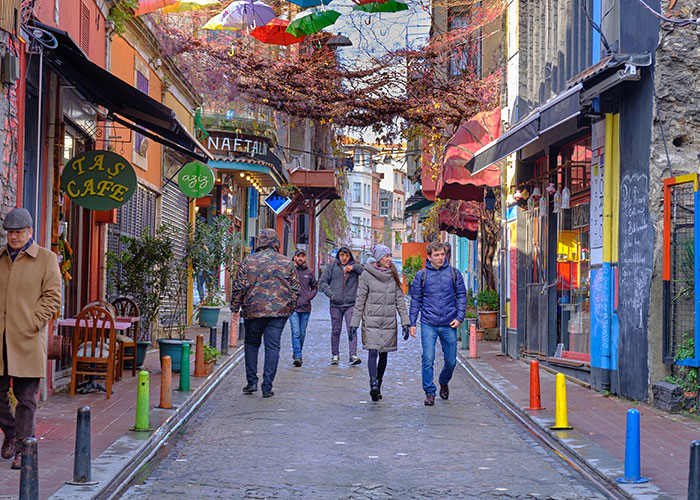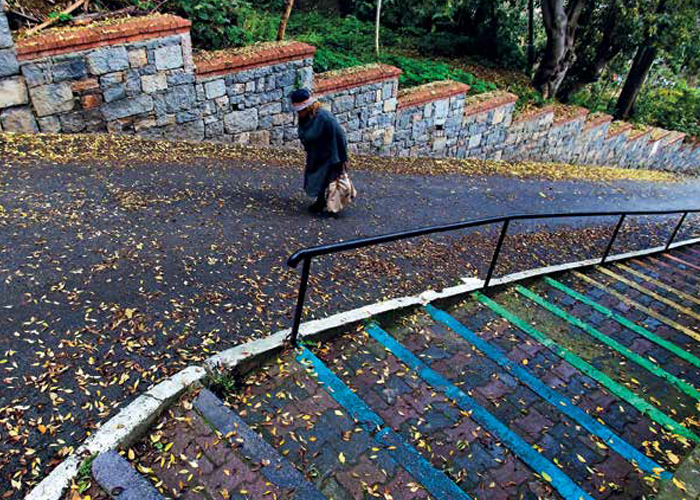
If you have a longing for the old atmosphere of Istanbul, Kuzguncuk is perfect for you. There is no exaggeration or deficiency. Everything is the way it used to be. Old Istanbul is associated with many districts; however, Çengelköy and Kuzguncuk always stand out among them. We do not know whether this is due to the pleasant memories of once popular Turkish TV series such as Perihan Abla, Süper Baba and Ekmek Teknesi, or whether it is the atmosphere of these districts which suffused these series, but one thing is certain: these districts do not display any exaggeration or deficiency. They are precisely what they would like to convey. A warm neighborhood, friendly people, and a humble architecture which is not disconnected from nature. Kuzguncuk... Its first known name was Hrisokeramos, which means “Golden Tile”. However, there are many stories about how it came to get its name today. Although some suggest that this district which used to be called “Kosinitza” became “Kuzguncuk” in time, Evliya Çelebi, in his travelogue Seyahatname, narrates that this district was named after a saint “Kuzgun Baba” who lived in this place during the reign of Mehmed II the Conqueror. Although there is a centenarian pier in Kuzguncuk, the main road which separates the district from the pier also demarcates the district from the coast side. Having stepped into the İcadiye Street after the traffic lights, you suddenly find yourself in a different world. It is like a familiar place, an old and worn-out photograph, the existence of which you recognize but cannot locate in your memories. It is probably a scene from an old Turkish movie or sentiments evoked by an episode of an old TV series, finding their way into your heart. The old district culture, with its greengrocers, grocery shops, coffeehouses, bakeries, barbers and children running to and in the streets, resists contemporary lifestyles. Kuzguncuk is one of the rare places on earth to have three religions living side by side. The district is also known as the first Jewish settlement on the Asian side and a Jewish village in the 17th century. The arrival of Christians and Muslims further enriched the district. This can be seen in Kuzguncuk Mosque and the Armenian Church Surp Kirkor Lusavoric, which almost share the same walls. Written sources narrate that the Armenian community supported the construction of the mosque, both materially and morally. Beth Yaakov Synagogue and Ayios Panteleimon Orthodox Greek Church, two temples that resist time, are among important works which display the atmosphere of tolerance in Kuzguncuk. It is believed that the water pouring from the holy spring built at the churchyard in honor of Saint Panteleimon, known as the Saint Doctor of Christians, is capable of healing any disease. STREET NAMES SPEAK FOR THEMSELVES Whenever you visit in Kuzguncuk, street names give you peace as soon as you hear them. These streets with humble names such as Simitçi Tahir, Tenekeci Mustafa, Baba Nakkaş, Yapraklı Çınar, Güzel Bahar, Üryanizade and Bahçe, are full of details that remind us of old Turkish neighborhoods. On these streets, where two- or three-storied houses with oriel windows accompany warm, sincere and friendly people, you may find anything that pertains to human life. If you forget those automobiles passing along the İcadiye Street, you can consider yourself lost in the pages of history. EKMEK TEKNESI, STILL THERE Kuzguncuk has always been quite popular among artists, some of them have even lived there for many years. Can Yücel, Rıfat Ilgaz, Oktay Rıfat, Hülya Koçyiğit and Uğur Yücel are several examples. Yet none of them, even the Perihan Abla TV Series which used to be quite popular, is immersed in Kuzguncuk as much as Ekmek Teknesi. Ekmek Teknesi TV Series, which started in 2002 and narrated the daily life of a middle-class Turkish family and their neighborhood in a satirical manner, shortly gained everyone’s appreciation. Along with interesting characters in the neighborhood, Nusret Baba and his bakery, Ekmek Teknesi, was almost a school for the entire community. Having heard “fill up the glasses”, everybody knew that Herodotus Cevdet had begun to tell his story in the coffeehouse. Today, if you visit İcadiye Street, you can find there Ekmek Teknesi which currently serves as a café and Kuğu Kıraathanesi where Herodotus Cevdet narrated his stories. A street named after Perihan Abla TV Series shot in the eighties in the district and the persistence of many details remnant of Ekmek Teknesi reflect Kuzguncuk’s desire to resist change and to remain as it is, rather than its appreciativeness. RESIDENTS OF THE SIMOTAS BUILDING Kuzguncuk is a treasure; whatever is of value in relation to the past comes out and welcomes people more beautifully than ever. The Simotas Building is one of them. The story of the building located at Bican Efendi Street began when Arditi, a Jew from Istanbul, asked a Greek architect called Simotas to construct a building for him to live with his family in 1923. Arditi family, from time to time, rented some parts of the building to the local people in Kuzguncuk. Later, the Simotas Building was used for different purposes such as a tube workshop, hair clip manufacturing shop, etc. After passing through the hands of landlords who wanted to turn the building into a boarding school and then a boutique hotel, the building was purchased by its current owners, the Birgül family. Refika Birgül, whom we know from a TV cooking show, revived the building in 2010 throughout a long period of restoration, after a period of 30 years without service. Today, from architects to lawyers, advertisers to dancers, tailors to sculptors, i.e. people from different professions, work and produce together in the building, leading a pleasant and collective life. KUZGUNCUK GARDENS ARE BEING REBORN Kuzguncuk Gardens, a.k.a ‘Gardens of Ilia’... The 17-decare green space, remnant of Sultan Mehmed Reşat era, had been used as gardens for many years, and its ownership was transferred from Greek Ispiro Şore to the Directorate General of Foundations in 1977. Local people in Kuzguncuk also call this place Gardens of Ilia, after Ispiro’s son. The gardens, transferred to the DGF in 1977 and appearing as green space in zoning plans until 1986, were zoned for construction in 1992 with several changes in zoning plans. Since then, the people of Kuzguncuk have struggled to preserve the gardens as green space. The struggle for this beautiful place, which is one of the greenest spaces in Üsküdar with its historical wooden buildings, green woods and gardens, has finally reached a happy conclusion. The Municipality of Üsküdar launched the Kuzguncuk Gardens Project a few days ago. With the Kuzguncuk Gardens Project to be jointly carried out by the Municipality of Üsküdar General Directorate for Parks and Gardens and Kuzguncuklular Derneği (Kuzguncuk Residents’ Association), the Gardens will be reconstructed in accordance with their original plan. The village center and the amphitheater will be the center of the gardens. Various events such as celebrations for national and religious feasts, iftar, ashura, pishi, Hıdrellez, summer cinema, presentations, exhibitions, charity bazaars, etc. will take place here. Gabion (wire basket) walls, which are made of natural stones filled inside wire cages, will not only function for level adjustment but also as benches with wooden boards to be mounted upon. On the other hand, fruit gardens and agricultural areas will revive the old gardens. The construction process of the gardens will pay particular attention to the use of natural materials. Many natural materials can be seen in the project details, such as wood chips for the flooring, wooden logs for separation, pumice stones for main axes, etc. Sports and walking areas, children’s playgrounds, library, areas for events, free areas for events, and even a small water pump for irrigation and a small lake are within the scope of the plan. With the Gardens, Kuzguncuk will reinforce the old Istanbul spirit that it already possesses. Actually, there are so many other stories to narrate in Kuzguncuk. Grab a camera and experience how it feels to get lost on the streets of Kuzguncuk. Believe us, you will not want to be found.

We hate spam as much as you do
© Copyright 2020, All Rights Reserved

 English
  Türkçe